
Key Takeaways
- Document every symptom and repair visit from the first warning sign.
- Keep repair orders, photos, videos, towing bills, and communications with the dealer.
- Understand the differences between a recall, a warranty repair, and a technical service bulletin.
- Do not continue driving when a defect affects braking, steering, power, or fire safety.
- Repeated repairs and time out of service may matter under state consumer-protection laws.
A new truck is supposed to provide dependable transportation, not create a calendar full of service appointments. Whether the issue involves rough shifting, repeated warning lights, water leaks, electrical shutdowns, or intermittent power loss, owners should treat recurring problems seriously. Drivers researching GMC reliability issues or similar concerns should focus on the facts of their own vehicle, including its symptoms, mileage, repair history, and periods when it could not be used.
The best time to start building a record is before the first repair appointment. A clear timeline can help the dealership understand the problem, support warranty discussions, and give the owner a more accurate picture of whether the truck has one isolated issue or a pattern of unresolved defects.
Why One Repair Visit May Not Tell the Whole Story
Some problems are difficult to reproduce during a short test drive. A truck may operate normally around the dealership but hesitate under highway acceleration, overheat while towing, lose power after long periods of driving, or display a warning message only after sitting overnight. The disappearance of a warning light does not necessarily prove that the underlying condition has been corrected.
For example, a truck owner may report a harsh transmission shift while pulling a trailer uphill. If the technician drives the unloaded truck for a few miles and cannot reproduce the problem, the repair order should still identify the towing conditions, speed, temperature, and the reported symptom. Those details can make a future diagnosis much more productive.
Common Types of New-Truck Defects
- Engine and transmission problems: Hesitation, stalling, overheating, rough shifting, loss of power, or repeated check-engine messages.
- Electrical faults: Dead batteries, blank screens, malfunctioning sensors, failed cameras, software errors, or unexplained shutdowns.
- Safety system concerns: Brake warnings, steering problems, airbag messages, stability control failures, or unavailable driver assistance features.
- Body and water leaks: Poor seals, wet carpeting, wind noise, corrosion, and moisture affecting electrical components.
- Suspension and steering issues: Vibration, pulling, uneven tire wear, clunking noises, or reduced control.
How to Build a Clear Defect Record
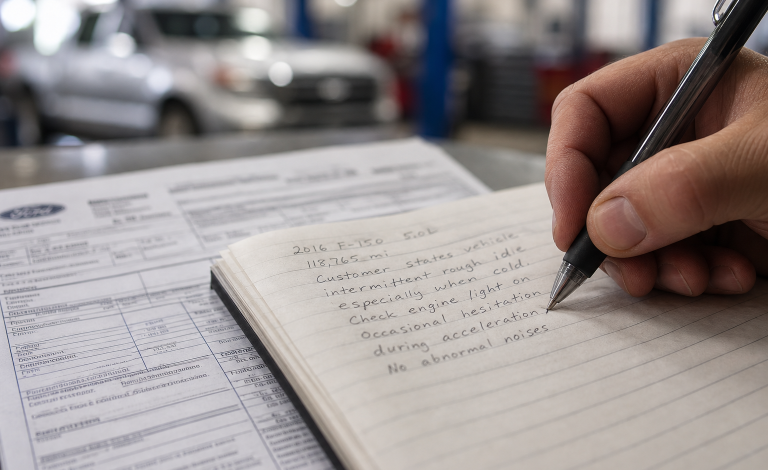
Use one notebook, spreadsheet, or digital folder for the truck. After every incident, record the date, mileage, location, weather, road type, speed, and whether the vehicle was towing or carrying a load. Describe the problem in plain language, such as “engine lost acceleration while merging” rather than simply “truck acted up.”
What Repair Orders Should Include
A useful repair order should state the owner’s exact complaint, the mileage at drop-off and pickup, diagnostic trouble codes, tests performed, parts replaced, and software updates completed. It should also say whether the technician duplicated the problem and whether the dealer recommended against continued driving.
If the wording is vague, politely ask for clarification before leaving. “Check vehicle” does not indicate that the truck stalled in traffic, that the steering became difficult to turn, or that the transmission slammed into gear. Precise language creates a more reliable repair history.
Recall, Warranty Repair, and Service Bulletin
- Safety recall: A manufacturer or federal safety agency identifies a safety-related defect or a failure to meet a safety standard. Recall repairs are typically carried out at no cost to the owner.
- Warranty repair: A dealer repairs a covered defect under the vehicle’s warranty. These visits can show how many opportunities the manufacturer had to correct a recurring problem.
- Technical service bulletin: A manufacturer issues a bulletin to dealers with diagnostic or repair guidance for a known symptom. A bulletin can be helpful, but it is not automatically a recall.
Owners can use the VIN recall search to check for unrepaired safety recalls and to review broader recall information for a particular year, make, and model. A recall may offer useful context, but it does not by itself establish the cause of every individual truck problem.
When a Vehicle Should Not Be Driven
Arrange for towing rather than driving if the brakes feel weak or unpredictable, the steering locks or pulls sharply, the engine stalls in traffic, the truck loses power without warning, or smoke, fuel, or substantial fluid leakage appears. A burning smell, repeated electrical shutdown, overheating, or a warning that a critical safety system is unavailable can also justify taking the vehicle out of service.
Keep the towing receipt and ask the repair facility to document why transport was needed. If the issue appears to present a broader safety concern, an owner can report a vehicle safety problem through the federal complaint process. The complaint should be factual and include the truck’s symptoms, dates, mileage, and any repair attempts.
Questions to Ask the Dealer
- Can the technician reproduce the problem under the conditions I described?
- What diagnostic tests, codes, inspections, or road tests were completed?
- Was a recall or technical service bulletin considered?
- Which parts were replaced, repaired, reprogrammed, or inspected?
- What should I do if the same problem returns?
- Can I receive the findings and recommended next steps in writing?
How Repeated Repairs May Affect Consumer Rights
Repeated repair attempts, extended time out of service, and serious safety-related defects may be important under state lemon laws or other consumer-protection rules. The requirements vary widely by state and can depend on the purchase date, warranty coverage, mileage, truck classification, number of repair opportunities, and length of time the vehicle was unavailable.
One frustrating visit does not automatically mean a truck qualifies for a legal remedy. However, a complete record can help an owner evaluate options with a qualified local consumer-rights professional and avoid relying on memory alone.
A Simple 30-Day Action Plan
- Days 1 through 3: Gather repair orders, receipts, photos, videos, and dealer communications.
- Days 4 through 7: Create a timeline of symptoms, mileage, repair visits, and lost-use days.
- Week 2: Review the warranty and check for open recalls.
- Week 3: Request a written explanation of the latest diagnosis and repair.
- Week 4: Consider professional advice if the defect continues or safety is in question.
Common Questions From Truck Owners
Does a service bulletin mean there is a recall?
No. A bulletin usually provides dealer guidance, while a recall is a formal safety action.
What if the dealer cannot reproduce the problem?
Ask for that result in writing and continue documenting the exact conditions that trigger the defect.
How long should records be kept?
Keep them for as long as you own the truck and throughout any warranty, insurance, recall, or consumer-rights matter.
Conclusion
A new truck should not become a recurring repair project. Careful documentation turns scattered symptoms and service visits into a clear record, helping owners make better safety, warranty, and consumer-rights decisions when problems persist