
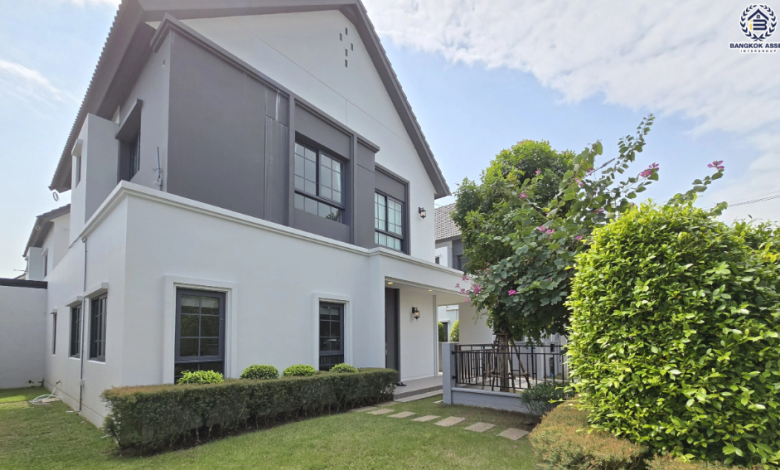
Two identical house designs can live very differently when one faces a main lane, another sits in a cul-de-sac, and a third occupies a corner. The evidence usually appears across several small observations rather than inside one decisive label.
The choice becomes more manageable when one concern stays visible: how plot position changes exposure, traffic, privacy, parking, and upkeep. Broad preferences can then be turned into questions that are testable during a visit.
Corner plots and extra exposure
Photographs rarely show the busiest hour of the day, which is often when circulation, parking, noise, and storage are truly tested. Walk the perimeter and translate dimensions into functions, accounting for gates, service access, water movement, shade, and room to maintain boundaries. The comparison stays grounded in a concrete concern: how plot position changes exposure, traffic, privacy, parking, and upkeep. Give the feature a clear role in the decision instead of letting it influence the shortlist through an undefined impression.
Boundaries, sunlight and maintenance
Compare upper and lower floors, shaded and exposed walls, and rooms with different orientations rather than judging comfort from one air-conditioned space. A practical comparison separates what can be improved inexpensively from what would require structural work or collective approval. Where the consequence is significant, return with the relevant household member rather than relying on a secondhand description. One practical concern sits behind that test: how plot position changes exposure, traffic, privacy, parking, and upkeep.
Cul-de-sacs and turning traffic
The household’s underlying priority remains clear: how plot position changes exposure, traffic, privacy, parking, and upkeep. Distinguish a temporary event from a recurring pattern by visiting again and asking a precise question rather than relying on one strong impression. Evidence gathered in ordinary conditions is more useful than a broad promise about comfort, convenience, or future potential. Compare the inconvenience over a full week; repetition can turn a minor irritation into an important ownership issue.
Examples in corner-lot detached houses in Nonthaburi can help translate these considerations into concrete questions about layout, access, condition, and responsibility before arranging a visit.
Main lanes and access convenience
A main lane can simplify directions and daily exits while increasing passing traffic, headlights, and exposure; observe the balance at more than one hour. That evidence speaks directly to the larger issue: how plot position changes exposure, traffic, privacy, parking, and upkeep. Give the feature a clear role in the decision instead of letting it influence the shortlist through an undefined impression. A feature that saves effort every day may justify a compromise elsewhere, while an occasional convenience deserves less weight.
Verify position-specific trade-offs on site
The same condition can help one household and frustrate another, so its value depends on who uses it and when. Define the practical consequence first, then decide what evidence would confirm it and what observation would count against it. The trade-off becomes clearer when stated beside the main concern: how plot position changes exposure, traffic, privacy, parking, and upkeep. Where the consequence is significant, return with the relevant household member rather than relying on a secondhand description.
Some attractive qualities can be recreated later through furniture, finishes, or landscaping; others are tied to structure, plot position, access, or collective rules. Giving the harder-to-change conditions more weight creates a more durable comparison. It also brings attention back to the central concern: how plot position changes exposure, traffic, privacy, parking, and upkeep.
Choose the Position, Not the Label
Placed beside the household’s priorities, these observations shift the decision away from excitement and toward durable fit. Position is not a premium label by itself; it is a bundle of benefits and obligations that must fit the household.